
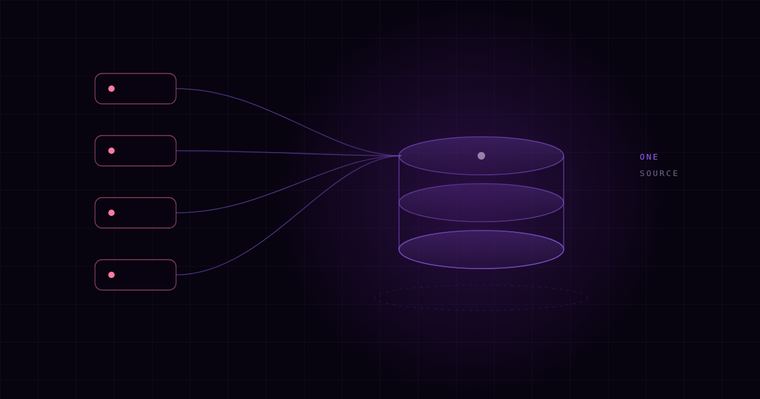
What a data warehouse actually is, and what it is not
The phrase gets used to sell everything from a spreadsheet to a nine-figure IT programme. For a business turning over a few million euros, here is what it means in practice, what it does not mean, and why it is the one part of the system you should insist on owning.
What it is
A data warehouse is a single place where copies of your business data are collected, cleaned, and stored in a shape that is built for asking questions rather than for running operations. Your accounting system is built to raise invoices. Your CRM is built to manage a pipeline. Your booking or point-of-sale system is built to take orders. None of them is built to answer “which customers who bought in the spring have not been invoiced since, and what did we spend to acquire them?” A warehouse is.
It works by loading data from every system you run on a schedule, usually overnight, keeping the history that the source systems overwrite, and applying one agreed definition to every term so that the same word means the same thing everywhere. The dashboards, the board pack and any question you put to it in plain language all read from that one place.
What it is not
It is not a database. A database is the general-purpose technology underneath; your accounting system already has one. A warehouse is a particular way of organising data for analysis, and it usually lives on a database built for that job.
It is not a dashboard tool. The visualisation software you may already have bought sits on top. Pointed straight at your operational systems, it will show you five versions of every number. Pointed at a warehouse, it shows you one.
It is not your ERP with more storage. An ERP runs the business day to day and is optimised for that. Asking it hard analytical questions slows it down and gives you only its own view of the world, not the CRM's or the marketing platform's.
It is not a data lake, or a fabric, or whatever this year's term is. Those are variations on where and how the raw data is kept. The idea a managing director needs to hold onto is the same: one copy of everything, one definition of every term, built for questions.
It is not a project you finish. Systems change, the business adds a product line, a definition needs revisiting. A warehouse that nobody maintains starts to drift within a year. Budget for it as a running part of the business, not a one-off build.
Why a business of your size needs one at all
Ten years ago the honest answer was that you probably did not. The tools were priced for corporations and needed a team to run them. That has changed. The storage and computing behind a warehouse are now rented by the hour from the major cloud providers, and the loading tools that used to need custom code are largely off the shelf. A company with five or six operational systems and a few million in turnover can have one running in weeks, at a cost that sits comfortably inside a marketing budget line.
The reason to do it is not the technology. It is that the alternative, one person in finance rebuilding the monthly pack from exports, has a cost you are already paying without seeing it on any invoice.
The one thing to insist on
Whoever builds your warehouse, make sure it is in your name. Your cloud account, your credentials, your data. A supplier can build it, run it and be paid to maintain it, but if the engagement ends you should be left with a working system and every byte of your history, not a login that stops working. This is the difference between buying an asset and renting a report, and it is the question to ask before any other.
We build the warehouse in your name, and it is the second of the four layers. See what sits above and below it →
Want to talk this through on your own numbers?
Thirty minutes with Glen, and a straight answer on whether 110 Analytics is the right fit.