01
Chasing numbers across systems
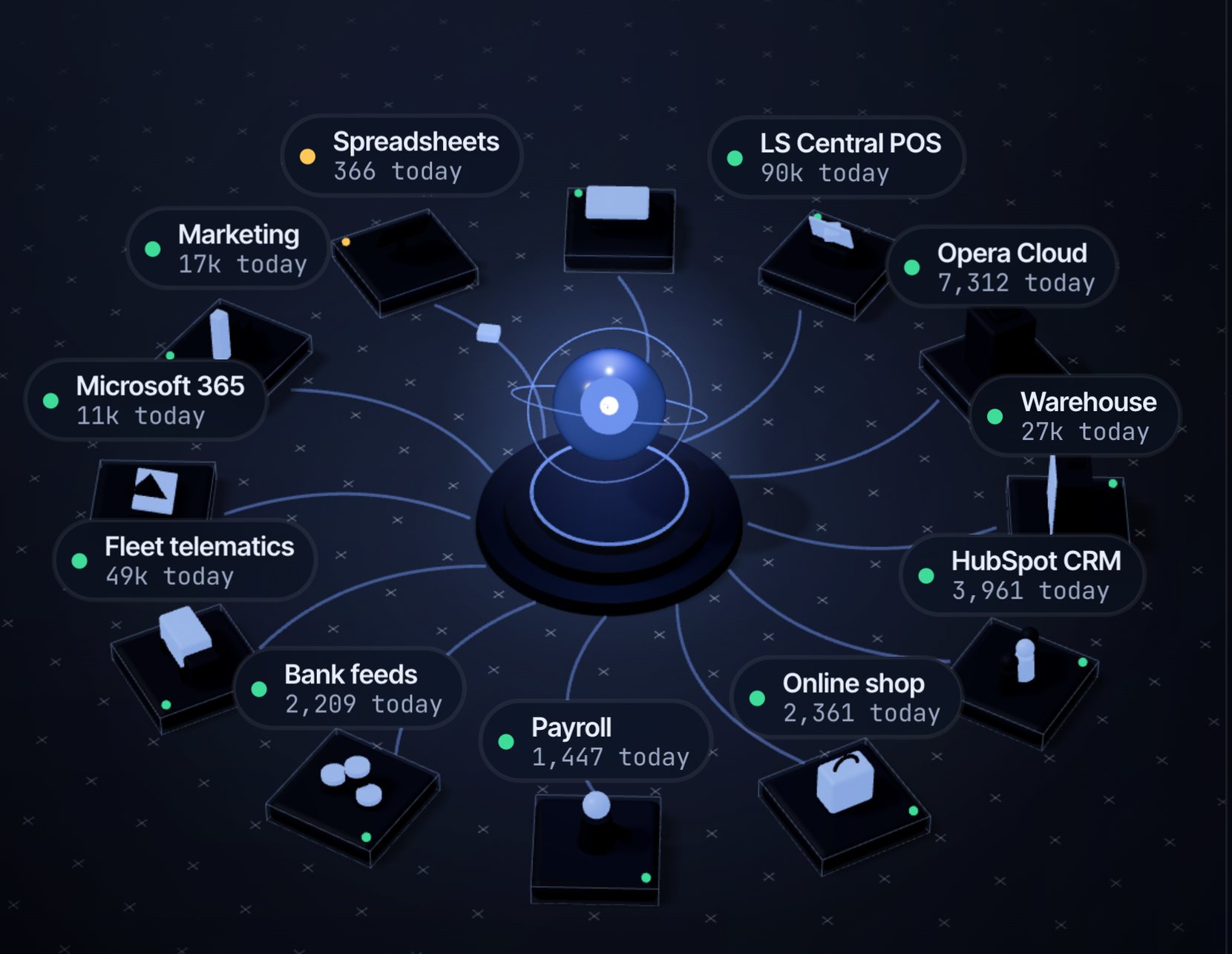
Your whole company, connected. Finance, sales, operations, payroll, the bank, the spreadsheets people keep on the side. Nothing is replaced. We read what is already there.


For the executive team
Know what’s happening. Know what needs you.
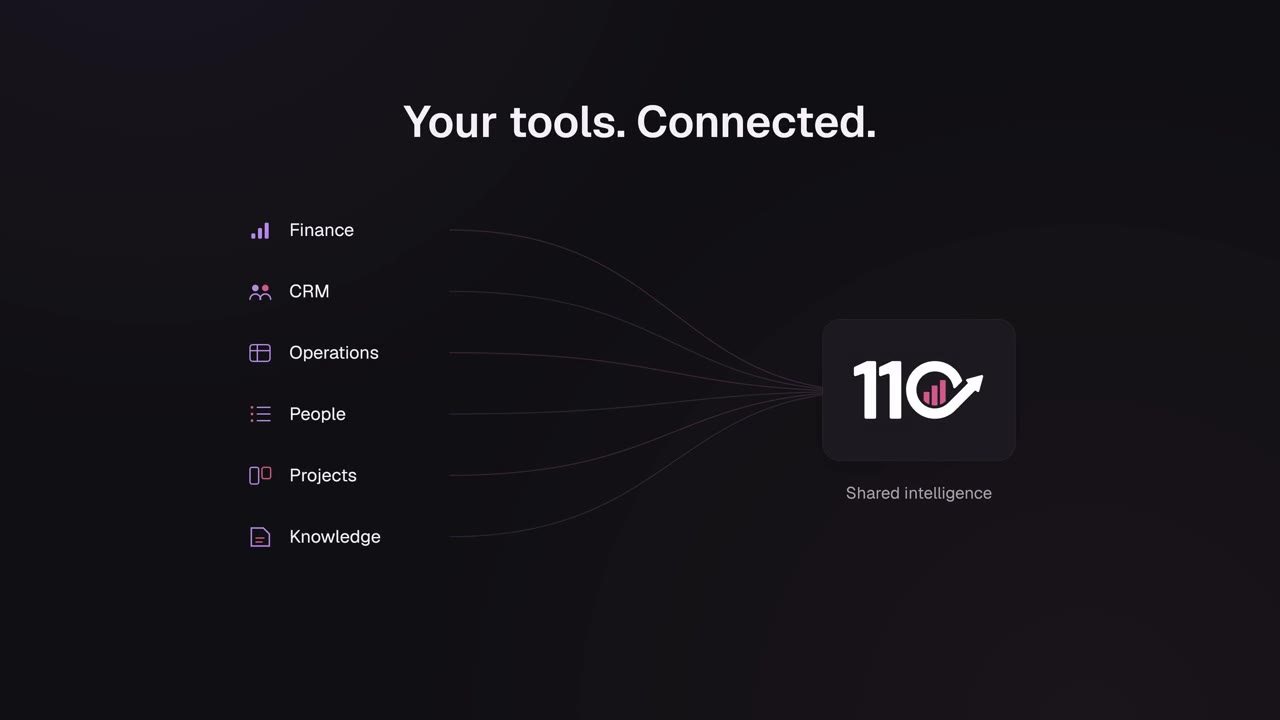
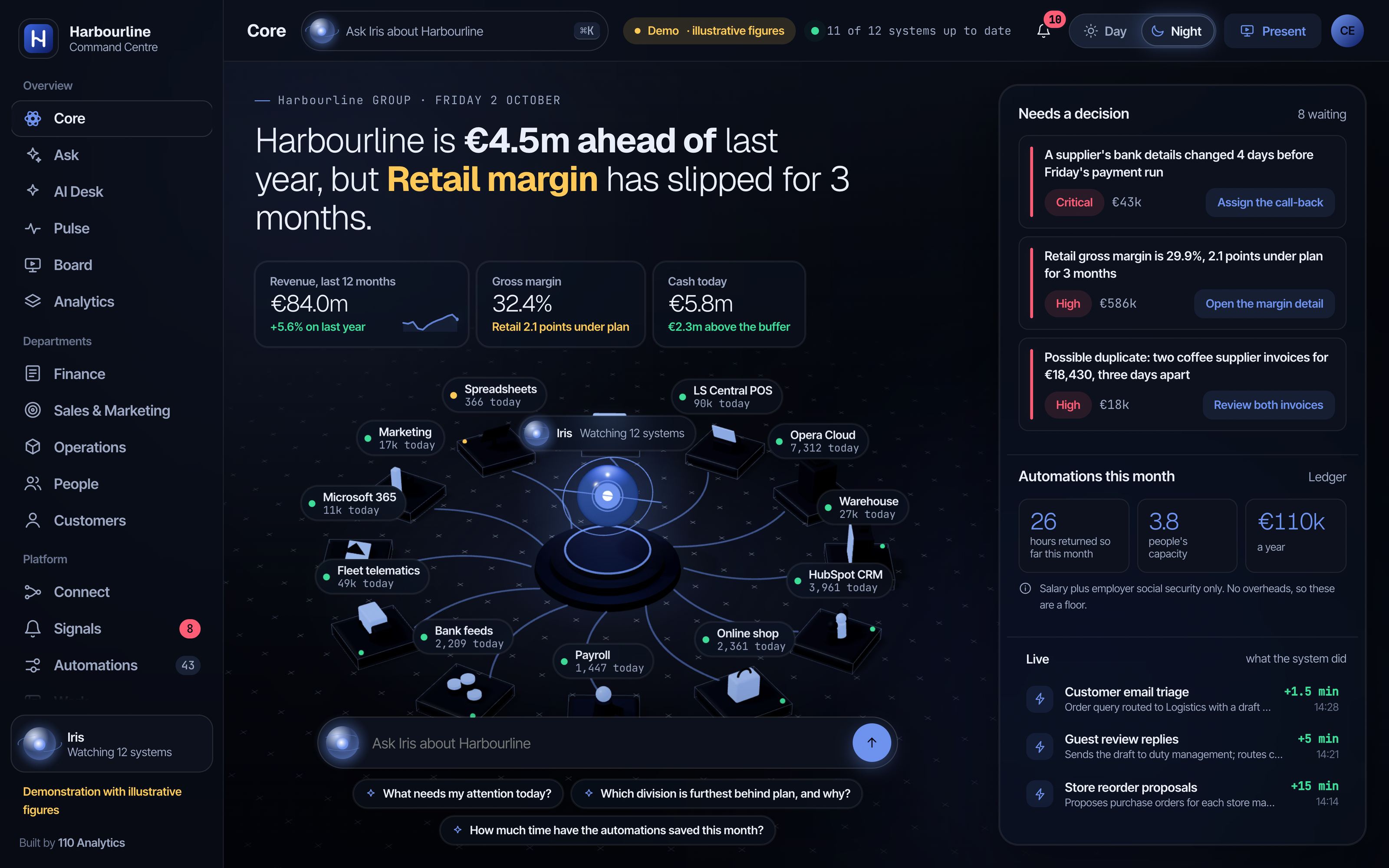
We build your company’s Command Centre. We connect the systems you already use, add an AI layer, and give you one place to see what is happening, understand why, and know where to focus.
An executive dashboard custom-built around your business: your systems, your definitions, the numbers that matter to you. This one belongs to Harbourline, a fictional group with hotels, stores and a depot, bigger than the companies this is built for so that you can see the whole range. Yours starts with the systems you already have, however few.
Harbourline is a fictional company. Demo figures.
Custom-built around your business. Scroll to walk through it.
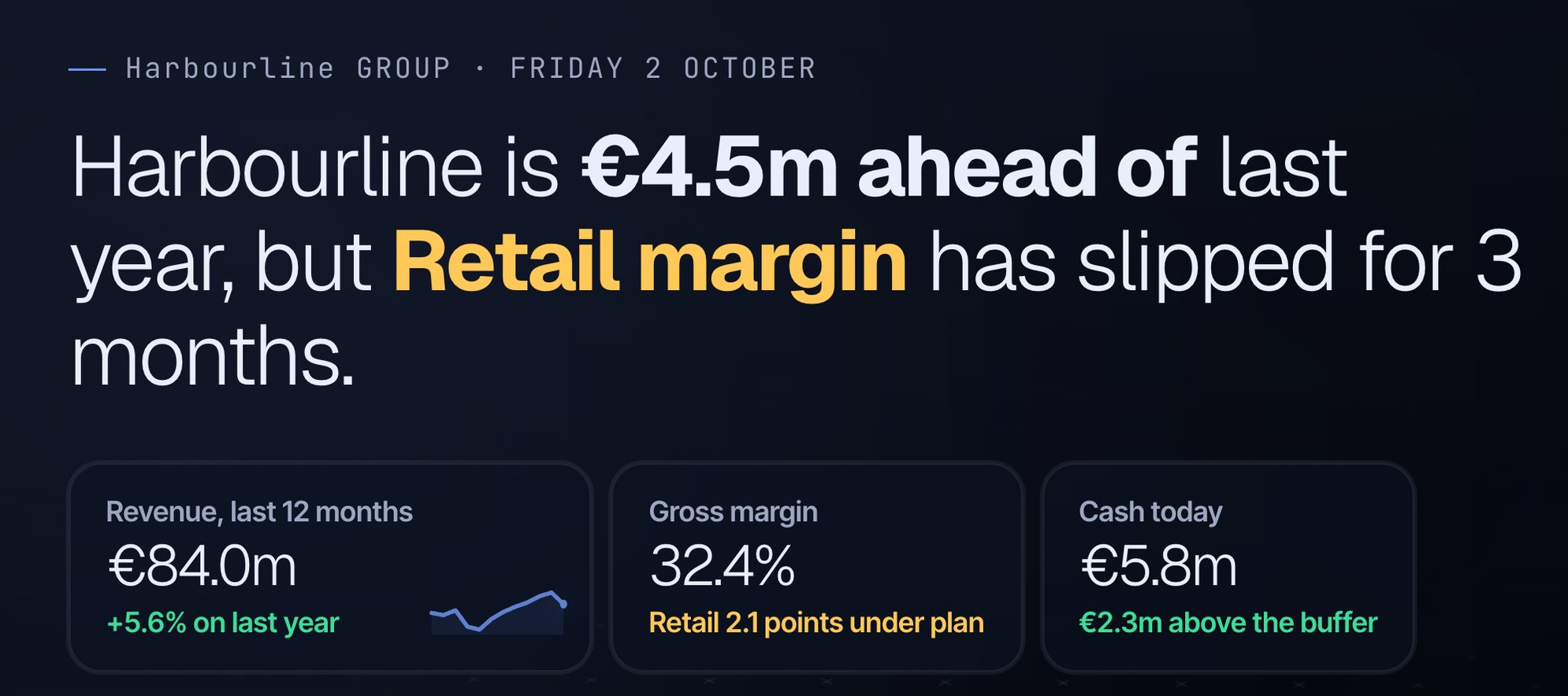
Where your company stands this morning, and what has slipped. Written from your own data, every day.
Custom to your companyHere, revenue, margin and cash. For you, the measures you choose, against your plan.
Your measures, your definitionsEvery system you run, connected and loaded overnight into one place you own.
Your systems, as they areEach alert with the money at stake and a next step ready for you to approve.
Your rules, your thresholdsAsk the way you would ask your accountant. The answer reads your data warehouse and shows its sources.
Your data, your questions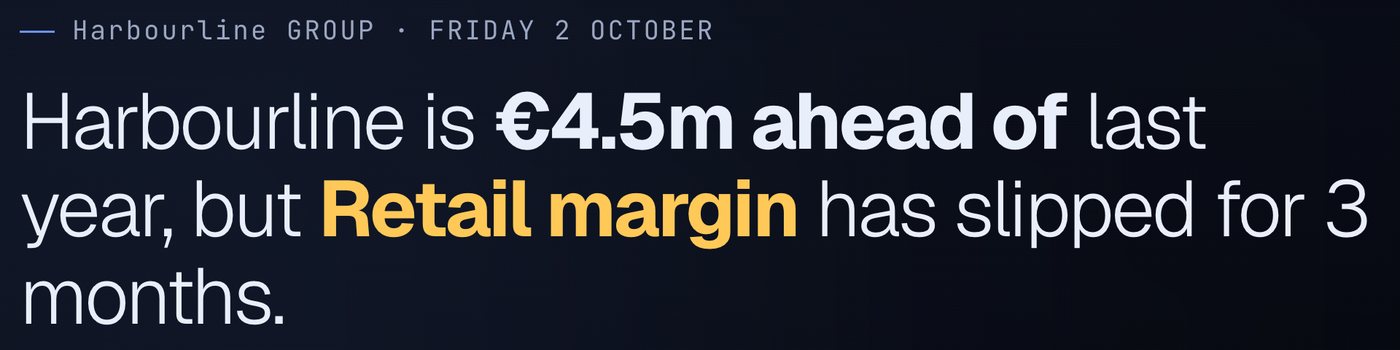
Where your company stands this morning, and what has slipped. Written from your own data, every day.
Custom to your company
Here, revenue, margin and cash. For you, the measures you choose, against your plan.
Your measures, your definitions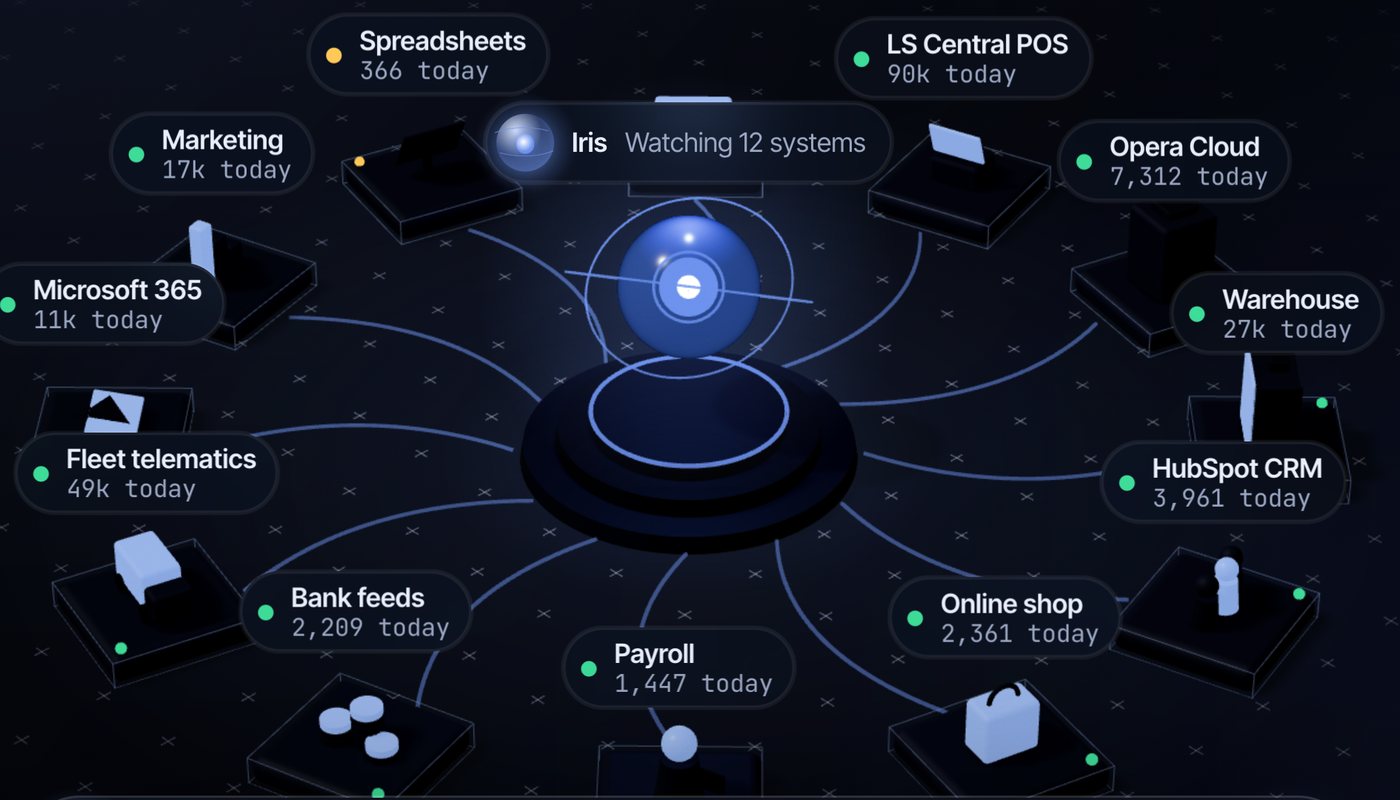
Every system you run, connected and loaded overnight into one place you own.
Your systems, as they are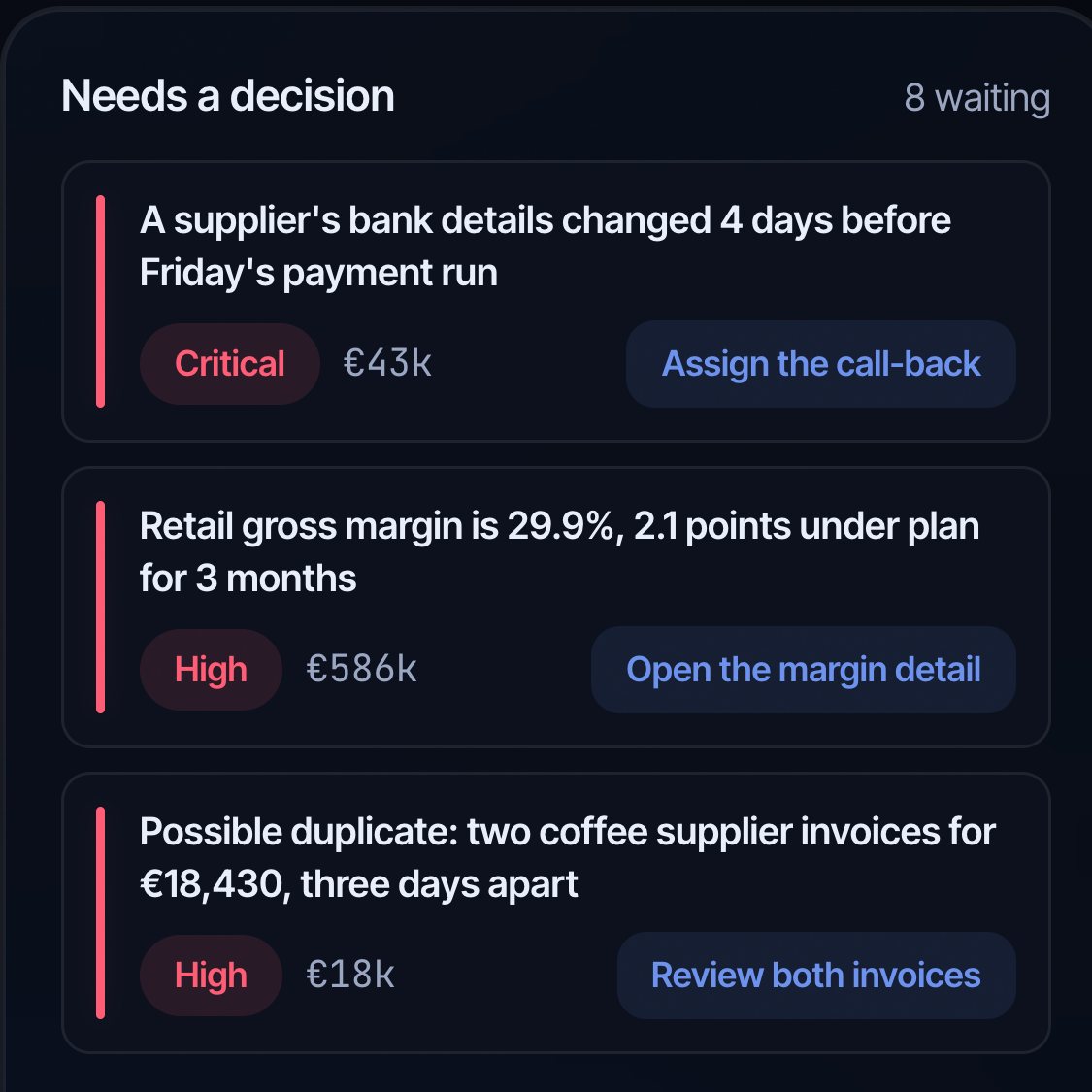
Each alert with the money at stake and a next step ready for you to approve.
Your rules, your thresholds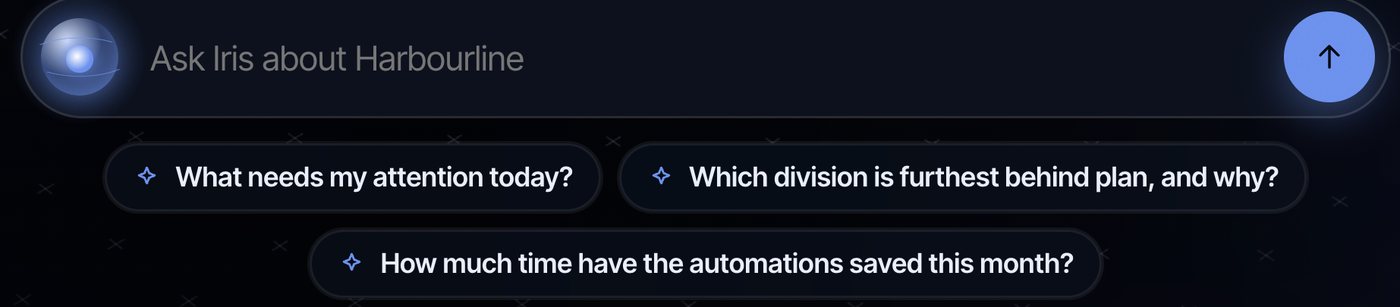
Ask the way you would ask your accountant. The answer reads your data warehouse and shows its sources.
Your data, your questionsYour whole company, connected. Finance, sales, operations, payroll, the bank, the spreadsheets people keep on the side. Nothing is replaced. We read what is already there.
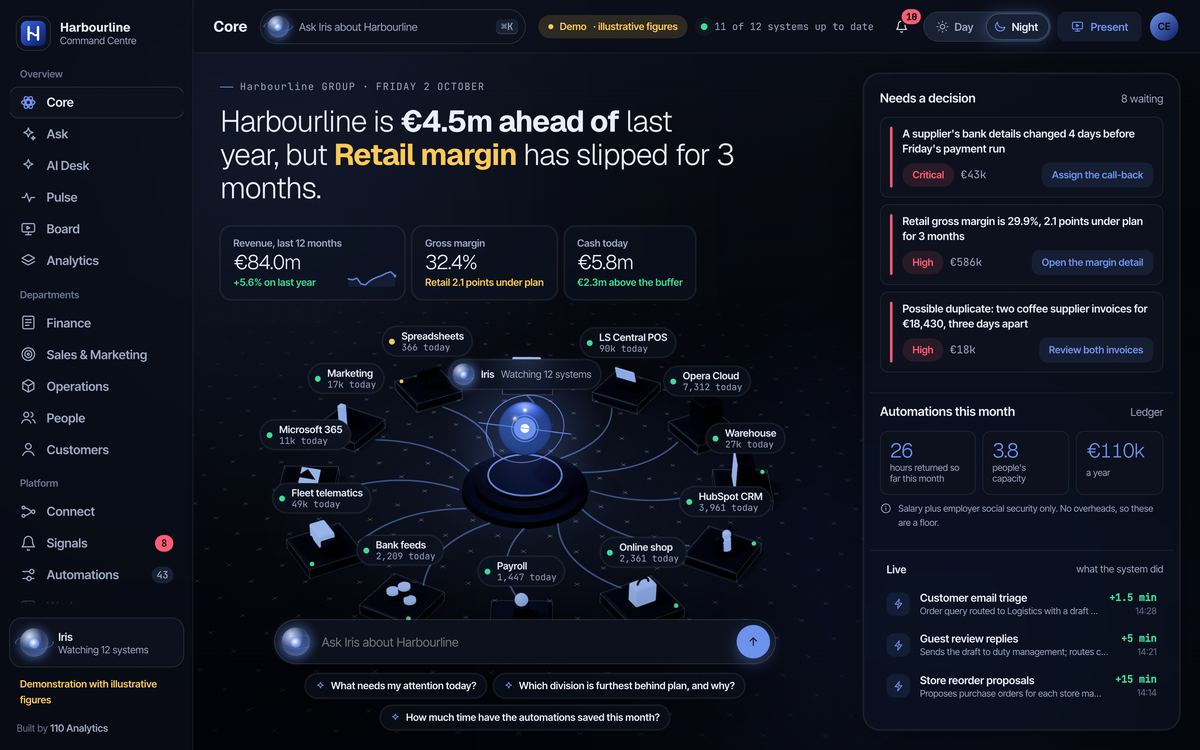
Where you stand, in one sentence. Ahead on the year, behind on margin, and for how long. Before the Monday meeting, not after it.
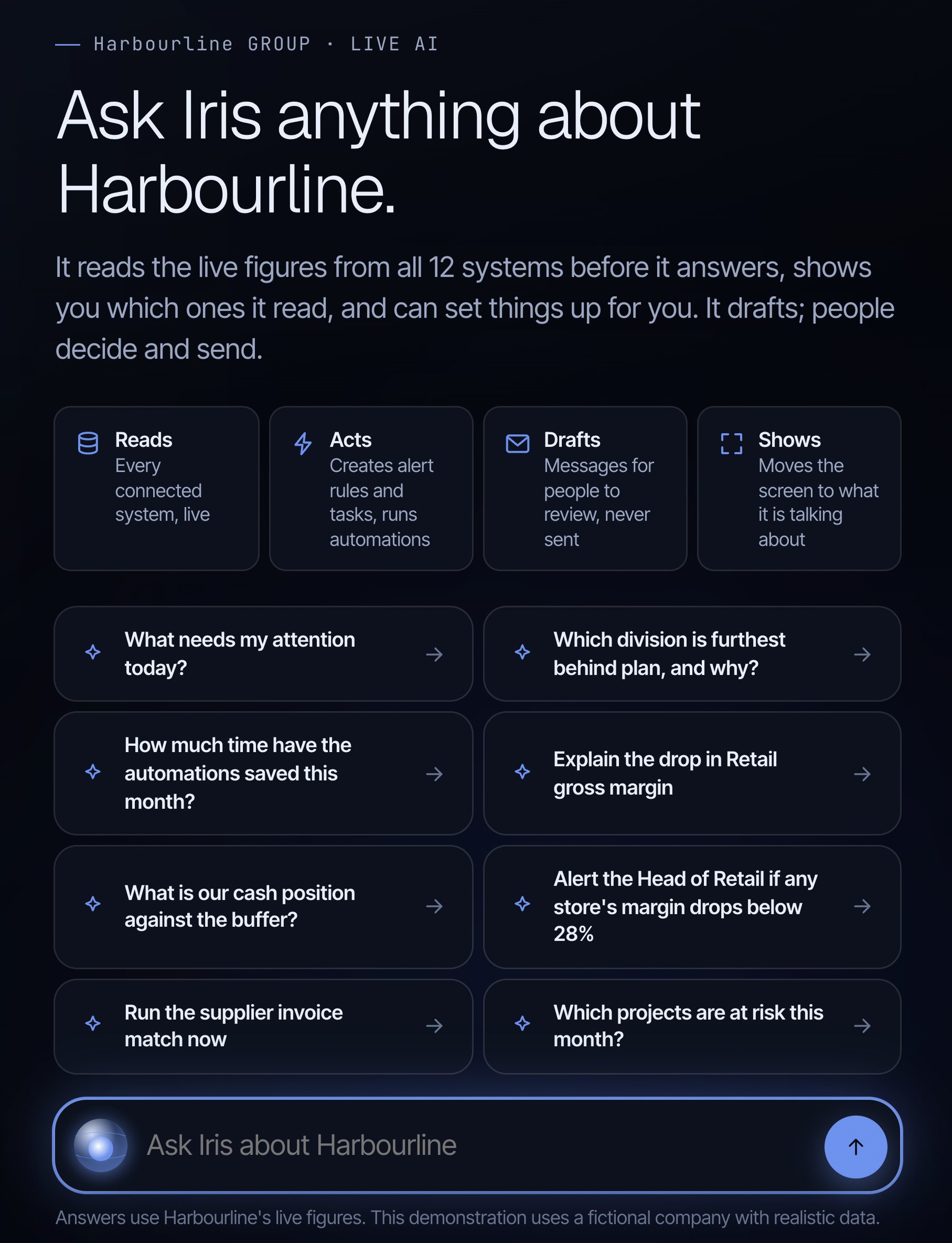
Ask your business. It reads your data warehouse before it answers, shows which systems the figures came from, and drafts; your people decide and send.
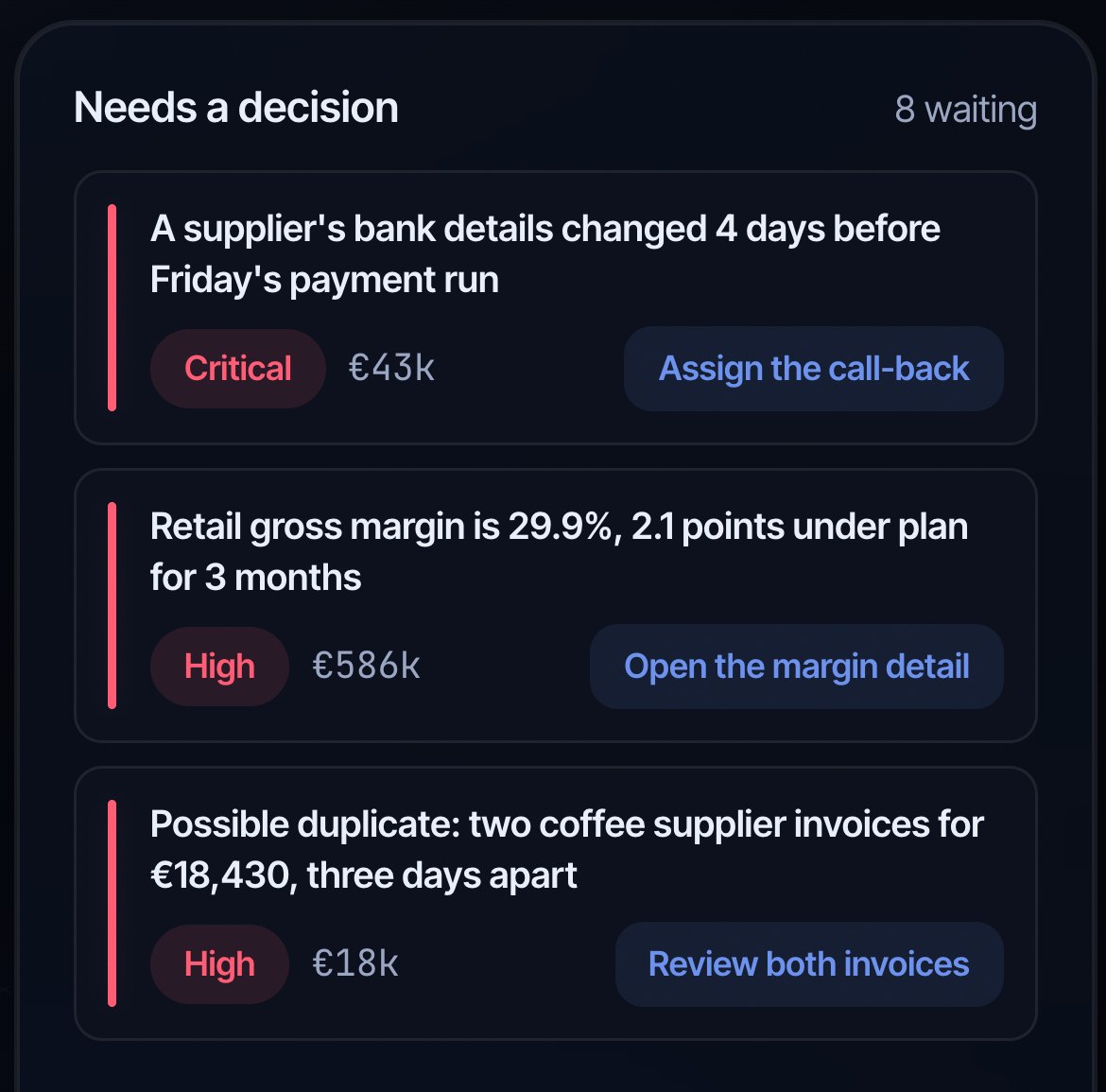
Know what needs you. A supplier’s bank details changed before a payment run; a margin under plan for three months; a possible duplicate invoice. Each with the money at stake and the next step.
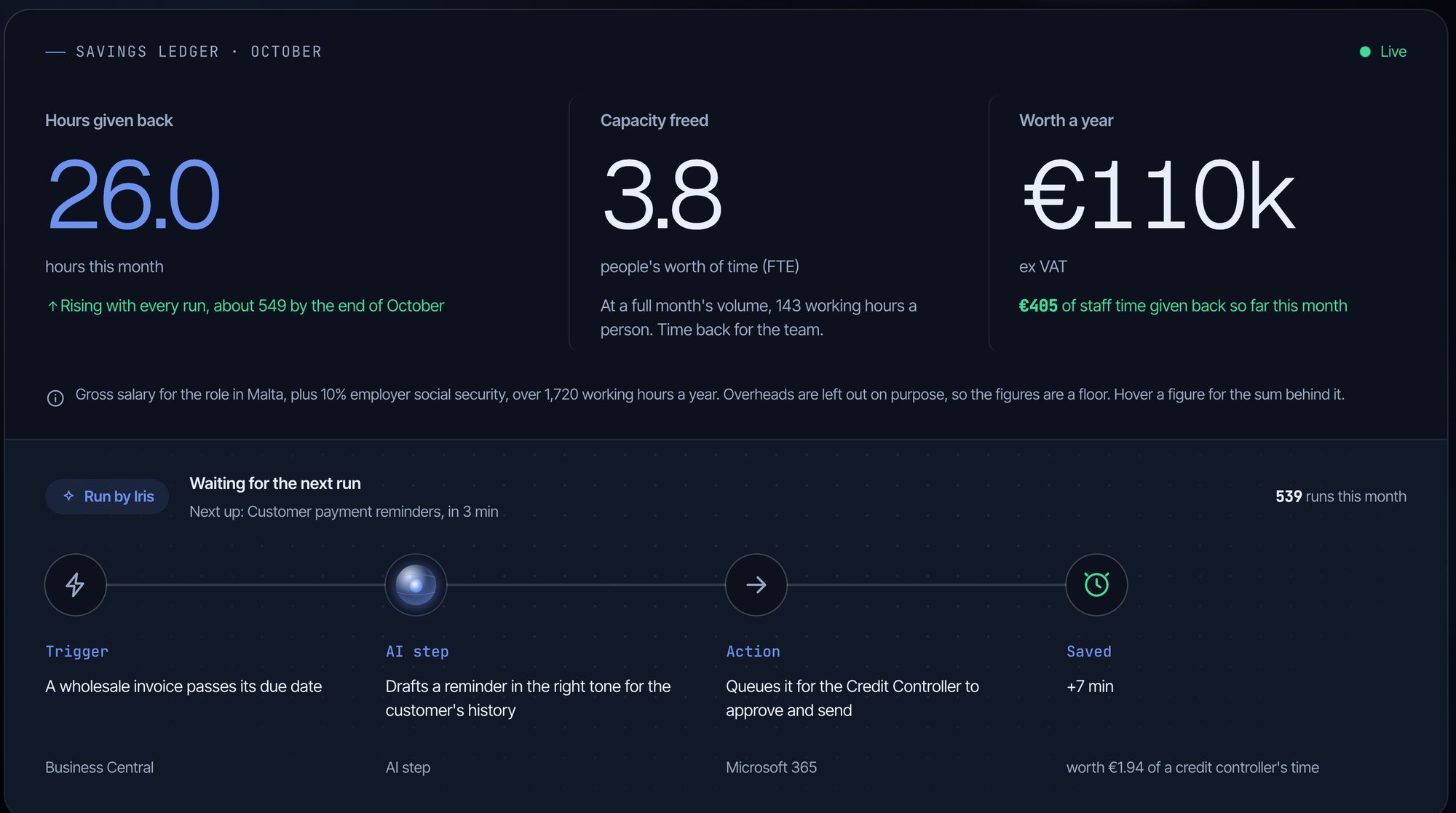
Work that runs itself. Payment reminders, reorder proposals, review replies: drafted on a trigger, queued for a person to approve, with the hours given back counted on a ledger.
The screen is the part you use. Underneath it, 110 builds the connected foundation around your organisation, in your own account.
No analyst to hire, no department to build. The warehouse loads itself overnight, the Command Centre is ready in the morning, and we look after both.
We connect what you already run and leave it where it is. We read it; we do not ask you to change it.
Your data, your warehouse, your access rules, under your name. You own it start to finish, and it keeps running without us.
We start with one important decision, prove the connected view, then expand around the business.
One place that shows your whole company: the measures you choose, drawn every morning from the systems you already run, with an AI layer that answers questions from the same data and shows where each figure came from.
No. Your accounting package, tills, CRM, payroll, bank and spreadsheets stay as they are. They are loaded overnight into one data warehouse in your own account, and the Command Centre reads from that.
You do, start to finish. The warehouse is built in your own account, under your name, with no lock-in. If we parted company tomorrow, it would keep running.
It is built around how you already run the business: your measures, your definitions, your people and what each of them may see. The screen you open is yours; we build and look after everything underneath it.
Book a data strategy call: thirty minutes with the founder, free, no pitch deck. We map one important decision first, prove the connected view, then expand around the business.
Harbourline is a fictional group with hotels, stores and a depot, built to show how it works with demo figures. Then book a call and we talk about yours.

You are booking a call with Glen, not a salesperson. You will leave it with three things.
Strictly necessary cookies are always on because the site cannot work without them. Nothing in the other two groups is set, and no tag fires, until you choose.
Your choice is remembered in this browser for 12 months and passed to Google Consent Mode. Nothing in the analytics or advertising groups loads before you choose.